
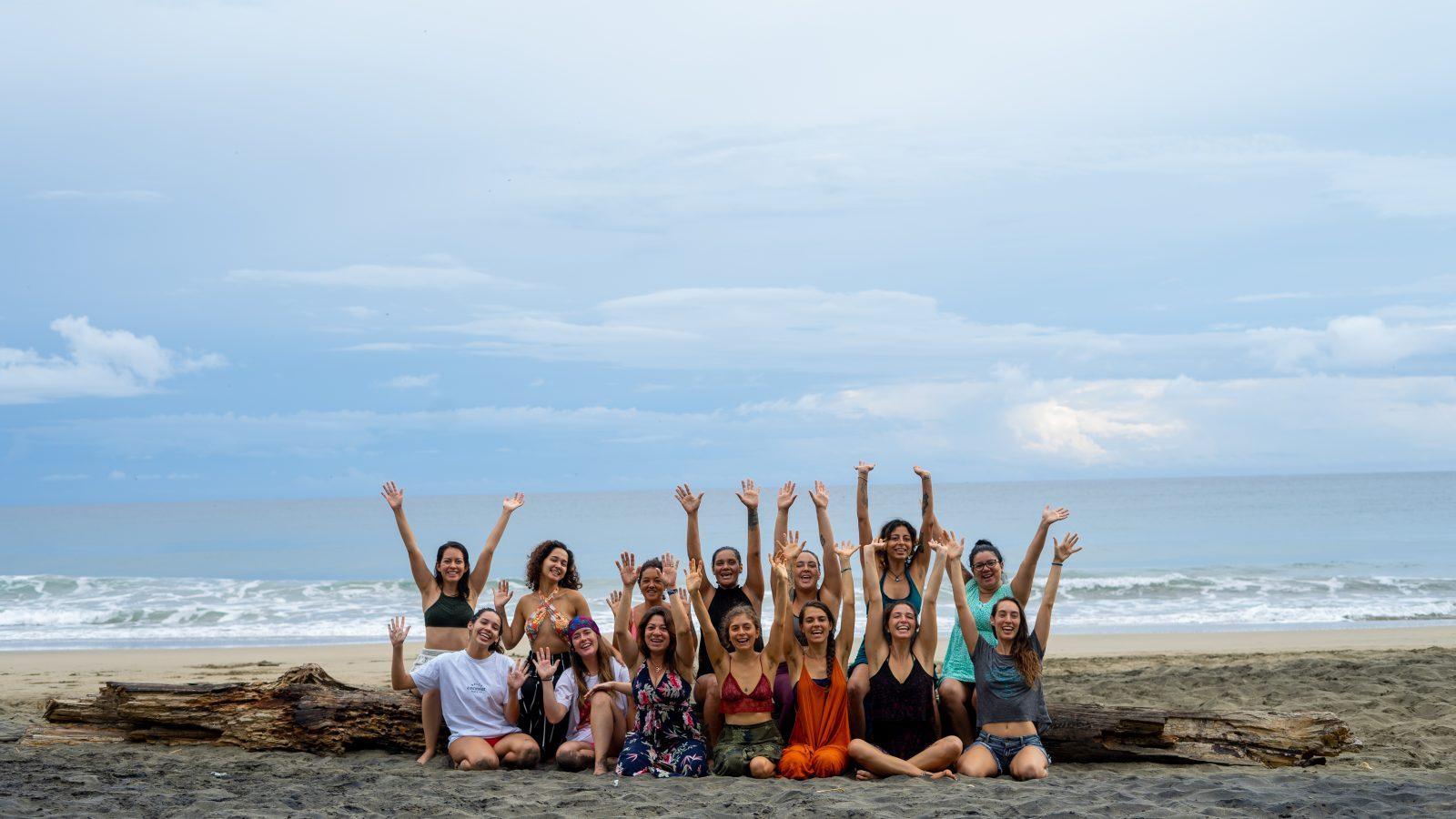
Our YES is just as radical as our NO.
A body recoiling from an unwanted touch. A jaw locking in shock from a non-consensual kiss. Arms crossed over the chest—an uninvited comment. A forced smile, fake laughter, feigned interest, a counterfeit orgasm. Most women know what it feels like to fake pleasure out of fear—fear of judgment, retaliation, violence, or anger. I know it too.
Even worse, I have doubted my own body’s voice—the one that tells me what feels good and what doesn’t—because someone else (or society itself) told me what I should like and what I shouldn’t.
At some point, or maybe at many, we’ve all adjusted our desires—our likes, dislikes, guilty pleasures, and professed preferences—to please, to fit in, to comply. Sometimes for a stranger, sometimes for someone we love.
As a holistic self-defense instructor and a fierce advocate for women’s autonomy, I am often asked what happened to me that made me care so much. Unlike one in three women worldwide (or likely more), I have not experienced direct sexual violence. But I am familiar with the slow, subtle ways in which people, media, and culture chip away at our self-trust, our connection to intuition, and our ability to claim our own pleasure.
I lead workshops where women practice saying “no,” setting boundaries through role-play, and striking with the heel of the hand in a safe, healing space. But I also make space for saying yes—for embodying pleasure, connection, and reclaiming the sound of our inner voice when it whispers “yes,” “no,” or “I don’t know yet.” Because for women—who have historically been silenced, punished, and dismissed, in both our pleasure and our pain—our YES and our NO are equally radical. Equally powerful. Equally transformative.
As an Empowerment Self-Defense (ESD) instructor, I define both violence and self-defense broadly.
A stranger’s attack on the street or the beach is violence. Emotional abuse is violence. Street harassment is violence. And yet, most of us are never taught how to defend ourselves against any of it.
Holistic self-defense offers practical strategies—verbal, physical, and psychological—to face risk, danger, or even mild discomfort in ways that support our safety and agency. At its best, it can also improve everyday interactions with family, friends, and partners by helping us identify our needs, desires, and boundaries, sharpen our intuition, and speak from it with confidence and power.
In holistic self-defense, we use the metaphor of a traffic light to understand boundaries and risk.
🟢 Green means all is well—calm, safe, at ease. The body is relaxed, the breath steady, the heart rate at a natural resting pace. An intimate relationship, a friendship, or a workplace should feel green most of the time, for most of us. This is a healthy place for the nervous system—a place where healing and learning can happen, because the heart and mind are open to connection.
🟡 Yellow is a state of alertness. Something feels off, discomfort creeps in, a personal boundary is being tested. The body may tense up, the heart rate or breath may quicken, posture and body language shift into heightened awareness.
🔴 Red means danger. Here, we need to apply self-defense principles (think, yell, run, fight, seek support) to keep ourselves safe.
But self-defense (holistic or otherwise) does not begin in the red. It starts in the green—with a continuous process of self-discovery and exploration. It starts with knowing our boundaries, understanding what we like and want, and being clear about what behaviors we will not tolerate.
Find your NO. Live your YES.
The motto of Choose Empowerment reflects our belief that the path to healing (through holistic self-defense) must include self-discovery, pleasure, vulnerability, and connection—just as much as boundaries, strength, and self-sufficiency. Just as recognizing red requires understanding green, our boundaries make the most sense when contrasted with our desires.
I am learning, little by little, to give voice to my boundaries and my desires—without fear, shame, or self-doubt. I am growing more comfortable honoring my body’s whispers, even when outside noise tries to drown them out. I am learning to forgive myself for the times I didn’t.
Across the many paths of my journeys, work, and studies, I have sought connection and pleasure, but I didn’t always know how to distinguish between what came from within me and what had been imposed—consciously or unconsciously—from outside of me. The tools I practice and teach have helped me—and thousands of participants—listen more closely, choose how to move forward with intention and power, and ultimately embrace our full autonomy—from NO to YES.
My hope is that we all can say YES to pleasure, with a strong back and a whole heart.
Originally Published in Mujeres Fuertes Autodefensa.
